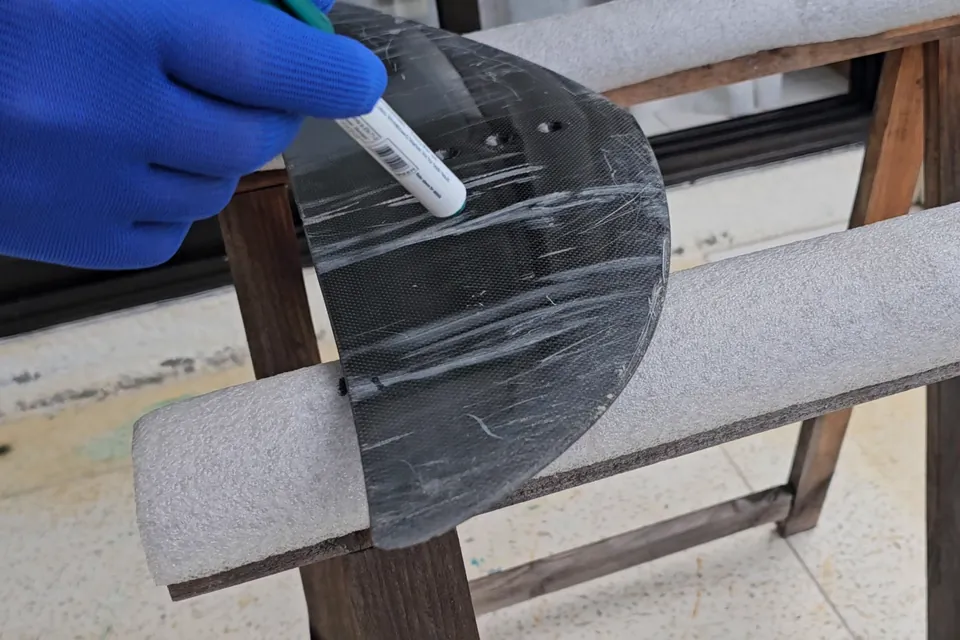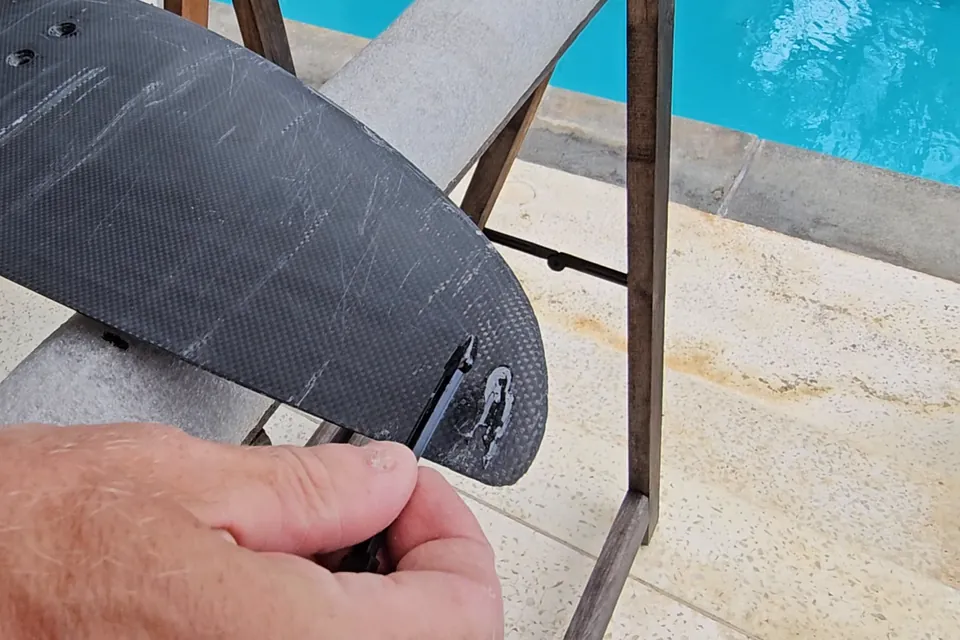

Foil care: how to prevent scratches and corrosion
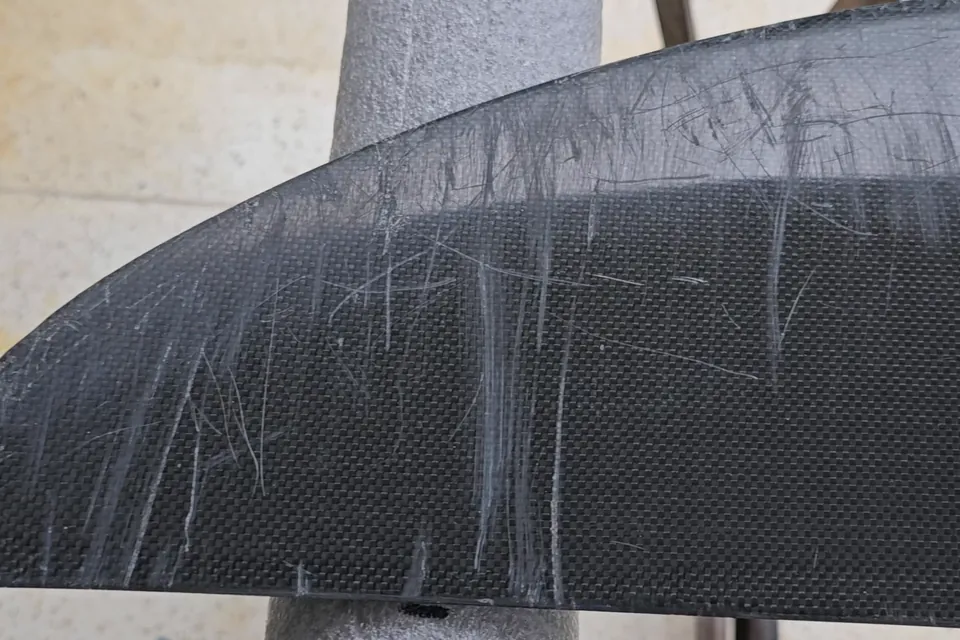
Many foil dings never happen on the water. A gust tips the board over on the beach. A wing gets dropped during assembly. Parts rub against each other in a bag. Add salt water and metal screws, and you get corrosion too.
A few habits prevent most of this. None of them takes long.
After every session: rinse, take apart, dry
- Rinse with fresh water and take the foil apart. Most brand manuals ask for this after every use. Rinsing and taking the foil apart helps prevent corrosion and stops bolts from seizing.
- Focus on the joints. Rinse the fuselage, the mast base, the screw holes and the wing connections well. That is where salt and sand collect.
- Dry each part with a soft cloth. Never pack a wet foil. A dry foil also keeps the cover from getting mouldy.
"My foil is all carbon, so I can skip this." Not quite. On a carbon foil, the screws and inserts are still metal, and they can still corrode.
Stop galvanic corrosion at the joints
Galvanic corrosion is corrosion that speeds up when two different metals touch, or when metal touches carbon. Salt water acts as the bridge between them. On a foil, that means stainless screws in aluminium threads, and aluminium in contact with carbon. Salt water creeps up the threads, especially when there is sand in them.
It can be fast. A stainless screw can lock into an aluminium thread in a few hours. A seized screw can snap before it even turns. Corrosion can also eat an aluminium part from the inside, with little to see outside, and end in a clean break.
What helps:
- Anti-corrosion grease or paste on the threads. It keeps salt water out of the gap between the metals. Put a thin coat on both the bolt and the threaded hole. It should be water-resistant.
- The product your brand names. Brands differ. Duotone supplies its own foil paste for all screws. Sabfoil names lithium grease for threaded holes and carbon-to-metal joints. AXIS sells Tef-Gel. Follow your manual.
- Loosen and flush. After a salt water session, back the bolts off a turn or two and flush them with fresh water, or take the foil fully apart.
- Tighten to the torque in your manual. Vibration loosens bolts while you ride, so check them before each session.
Keep sand out of threads and joints
Sand is the other enemy. Sand in an insert can damage the thread for good. If sand gets in, rinse it out with plenty of water before you screw anything.
- Keep the contact surfaces between the wings and the fuselage clean.
- Keep the bolt holes free of sand and dust.
- Assemble on a smooth, clean surface, not on bare sand. A towel, a mat or your board bag works. Protect the nose and tail of the board.
- Sand trapped between the mast and the board can mark the surface. Clean both before you mount the foil.
On the beach
- Lay the board and foil in line with the wind. Then a gust cannot push the mast sideways and tip the foil onto a wing tip.
- Put the covers back on while the foil waits on the beach. Use the mast cover when the mast is off the board.
- Do not rest the board on its rail with the front wing holding it up.
- Stop before the water gets shallow. Step off and walk or swim the last part. Any hit on an underwater obstacle weakens a foil to some degree.
Packing and travel
- Give each part its own cover: front wing, stabilizer and mast. Padded covers are best for the wings.
- If you still have the foam box your foil came in, use it. It is one of the safest ways to travel with a foil.
- Put screws and tools in a separate pouch so they cannot knock around the bag.
- Protect the wing tips from crushing, and wrap carbon parts so they do not rub.
- Pack tightly. Parts that cannot move cannot knock into each other.
Sun and heat
Long sun exposure can weaken a foil's structure over time. When you are not riding, keep it in the shade and away from heat. Store it in a cool, dry place.
A black carbon mast heats up fast, in direct sun or in a closed car. Epoxy gets softer while it is hot. If your foil has been baking, let it cool in the shade before you ride. Never leave the foil in a hot car.
Many warranties also exclude damage from UV or heat. One more reason to keep the foil in its bag.
A quick routine
- Rinse with fresh water and take the foil apart.
- Dry every part.
- Check the screws and threads, and grease them as your manual says.
- Covers on, then into the bag.
- Keep it out of the sun and out of a hot car.
Already scratched?
Send us two photos: a close-up of the damage and one of the whole part, plus the brand and model. We will tell you honestly what can be done.
Sources
- Duotone – SS25 Carbon Mast & Fuselage user manual (PDF)
- F-ONE – Hydrofoil Carbon Mast user guide (PDF)
- GONG – Aluminium mast foil setup user guide (PDF)
- GONG – Allvator carbon foil user guide (PDF)
- GONG Galaxy – Gear: galvanic corrosion on the foil
- Sabfoil – Warning & Safety
- Starboard iQFOiL – Product care
- AXIS Foils – Tef-Gel Antiseize Lubricant
- Slingshot Australia – How to maintain your foil and make it last
- Cabrinha – Fusion Foil user manual (PDF)
- SROKA – How to maintain your carbon foil?
- SROKA – Flying with a Wing Foil
- MACkite – How to Pack Your Hydrofoil for Travel
- Windance – Wing Foil Maintenance & Corrosion Prevention
- Epoxyworks (WEST SYSTEM) – If You Can't Take the Heat: Heat Deflection Temperature
- Armstrong Foils – Warranty and Replacement Policy