
DIY foil repair: what to check before sanding or filling
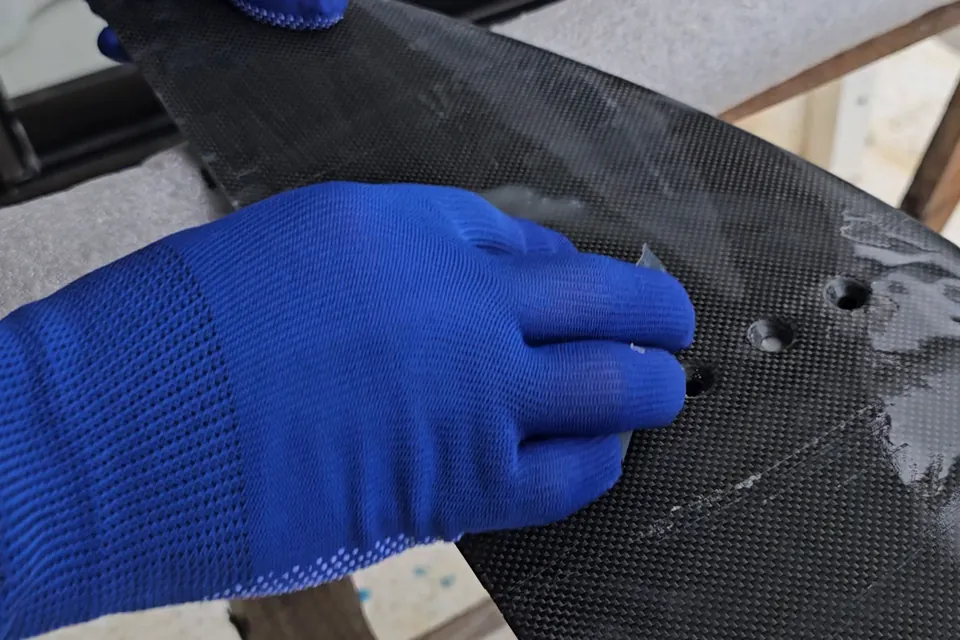
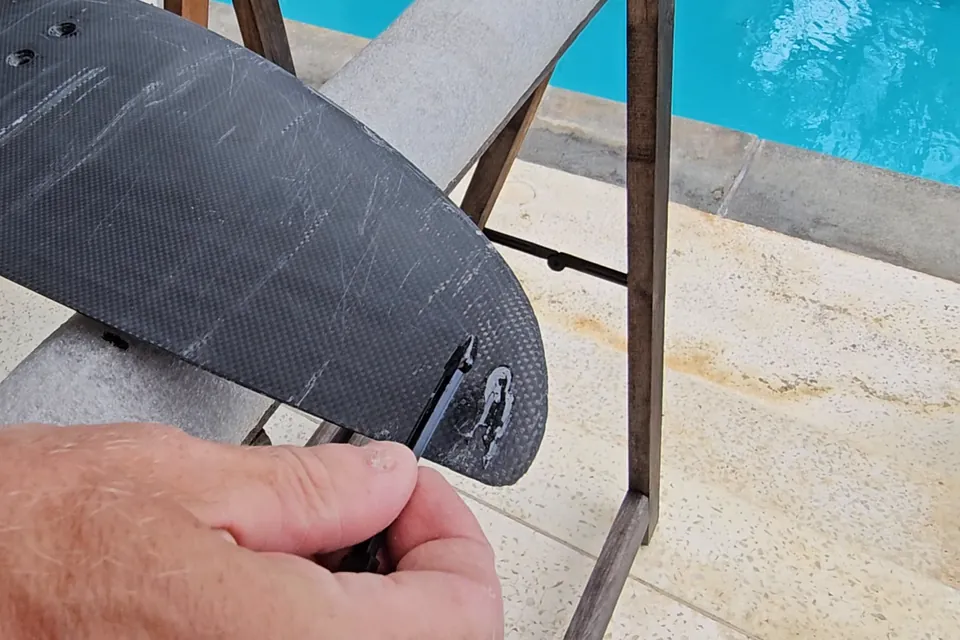
Some foil marks are suitable for maintenance at home. That does not make every chip or groove a DIY repair. Before buying epoxy or sandpaper, identify the part, the damage and what its manufacturer allows. A neat finish is useful only when the underlying part is sound.
Start with four questions
- What material and finish does this particular part use?
- Is the mark confined to the surface, or are there cracks, loose fibres or damage around a mounting hole?
- Does the manufacturer give instructions for this kind of damage?
- Can you follow those instructions without changing the wing's profile or edge shape?
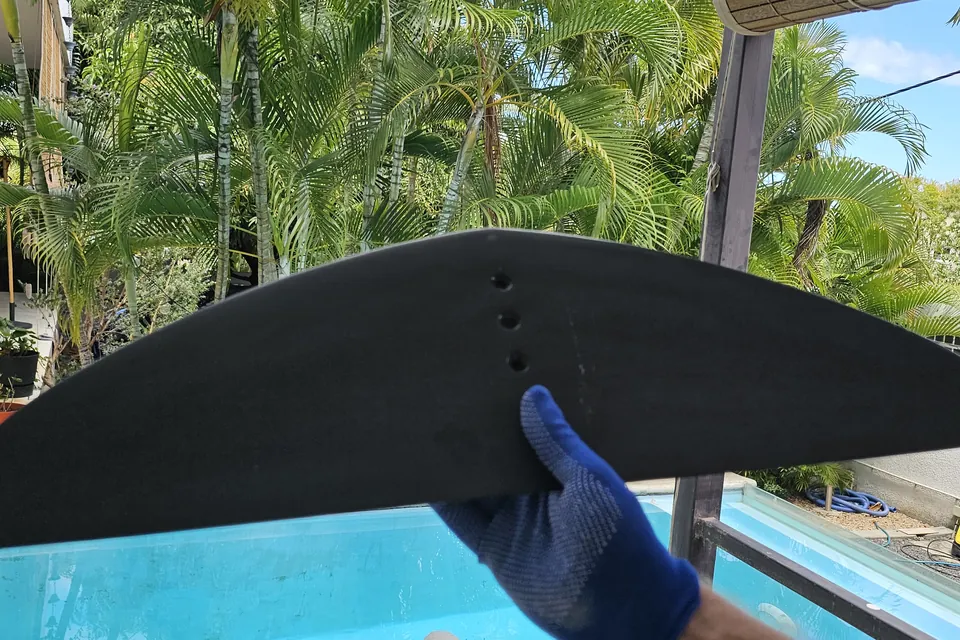
If an answer is unclear, take photographs before touching the surface. Compare the mark with the examples in our guide to scratches, chips and cracks. For a crack, loose joint or suspected structural problem, arrange an assessment before riding again.
What grit sandpaper should you use?
There is no grit number that fits every foil and every job. Armstrong's manual and ENSIS's maintenance guide give different recommendations for their particular surface work. A recommendation for a small surface mark is not a recipe for rebuilding a damaged tip.
First decide whether you are preparing a coating, levelling a filled groove or working near an edge. Follow the instructions for your model and the repair material. DarkFoilS's sanding guide explains how uneven removal can change the foil's geometry. Do not try to erase a deep groove by sanding down the surrounding wing until the groove disappears.
Which epoxy or filler should you buy?
The product must suit the part and the job. A surface filler and a repair that restores damaged carbon layers serve different purposes. A label saying “carbon repair” does not establish that a material is suitable for your wing.
Before choosing it, check:
- Whether it is compatible with the original material and finish.
- How the supplier specifies surface preparation, mixing and curing.
- Whether the job is a surface fill or requires a different repair process.
- How you will restore the contour without removing the surrounding original material.
If you cannot establish these points, ask the manufacturer or repairer rather than choosing from a short video. Repairing an inflatable wing canopy is also a different job from repairing a submerged carbon foil.
Check your warranty before modifying the part
Armstrong lists unauthorized repairs among its warranty exclusions. Check your own brand's terms, especially if you suspect a manufacturing defect. Send the dealer clear photographs and the purchase details before sanding or filling.
If you have already started, tell the repairer what you used, what you removed and when. Keep the original photographs. This information makes it easier to assess the next step.
When is a workshop the better choice?
Ask for an assessment when the damage depth is uncertain, material is missing from a tip or edge, or the shape is difficult to reproduce. Request an explanation of the proposed work and its limits, as well as a price.
At FoilRevive, front wing + stabilizer surface repair starts at Rs 5,500 per set. The final price depends on the type and extent of the damage. See repair prices or send us photos of your particular case.