
Why does my foil whistle? Checks before sanding an edge
A whistle does not identify a broken part on its own. ENSIS associates foil noise with trailing-edge shape or unevenness on the stabilizer, front wing or mast. The first useful step is to inspect the setup and establish when the noise appeared, before deciding whether an edge needs work.
Did the sound appear after something changed?
Write down the circumstances. A repairer or manufacturer can use a specific description much more easily than “my foil is noisy”.
- Has it made this sound since new, or did it begin after an impact?
- Did you change a wing, stabilizer, shim or another part?
- Is the noise present throughout the session or only in a particular speed range?
- Did sanding, coating or another repair precede it?
- Does the sound come with vibration, a loose connection or a change in handling?
Do not keep riding to diagnose a setup that has a crack, a loose joint or another suspected safety problem. Start with the after-session damage checklist.
What should you inspect on land?
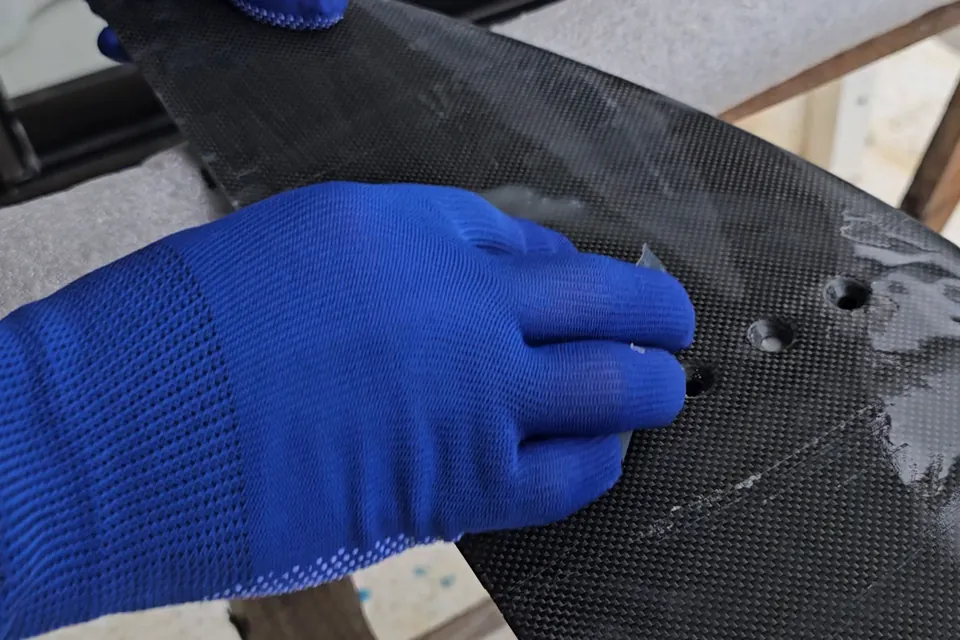
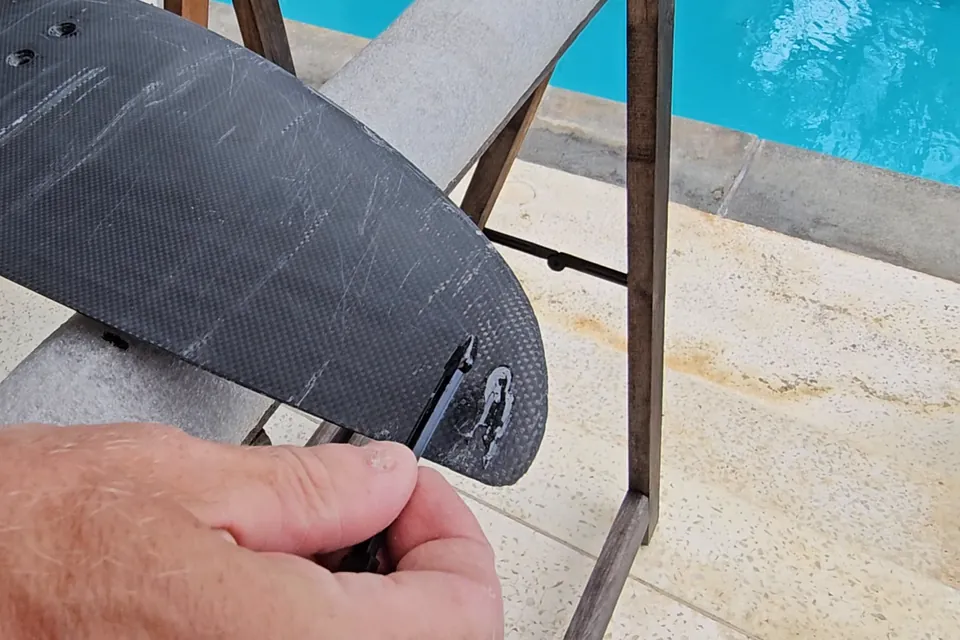
Rinse the parts and check them in good light. Look along the edges of the wing and stabilizer for a chip, burr, rough patch or uneven previous repair. Check the mast and connections as described in the model's manual.
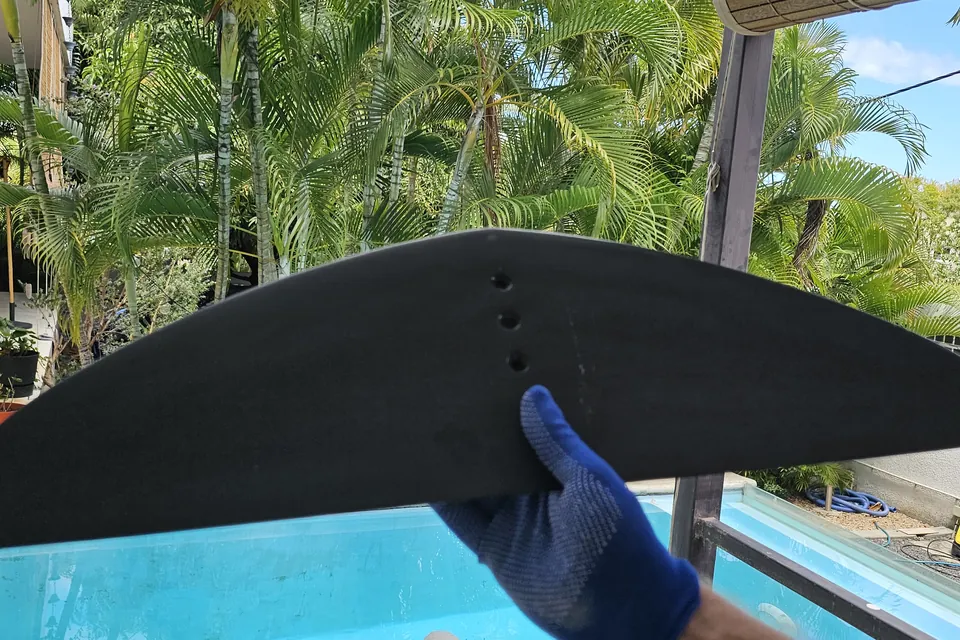
Edges can be sharp. Avoid running a bare finger along them. Take a close-up from each side and a photograph showing the whole part. A larger view helps someone understand where the mark is; the close-ups show its detail.
If you see missing material, treat it as a damage assessment rather than merely a noise complaint. Our guide to chips and cracks explains the difference.
Should you sand the trailing edge to stop the whistle?
Only after identifying the likely source and checking the instructions for the actual model. An edge treatment described for one foil does not automatically suit another. The correct side, shape and amount of material removal cannot be selected from the sound alone.
Ask the brand a concrete question: does this model have a recommended procedure for this noise, and does that procedure affect the warranty? Include the model, the circumstances and photos. If the foil was recently repaired, show the repairer what changed.
Sanding every edge as a trial makes the result harder to assess. A quiet foil is also not proof that an underlying impact mark has been repaired correctly.
What should you send for an assessment?
Send the brand and model, photographs of the whole part and the suspect edge, and a short description of when the noise began. If you already have a recording, include it. You do not need to return to the water solely to record a suspect part.
FoilRevive can assess visible surface damage from your photographs and tell you whether an inspection is needed. Send photos and see our repair prices. A whistle alone is not enough to quote a specific repair.