
AXIS ART V2 879 foil repair in Mauritius
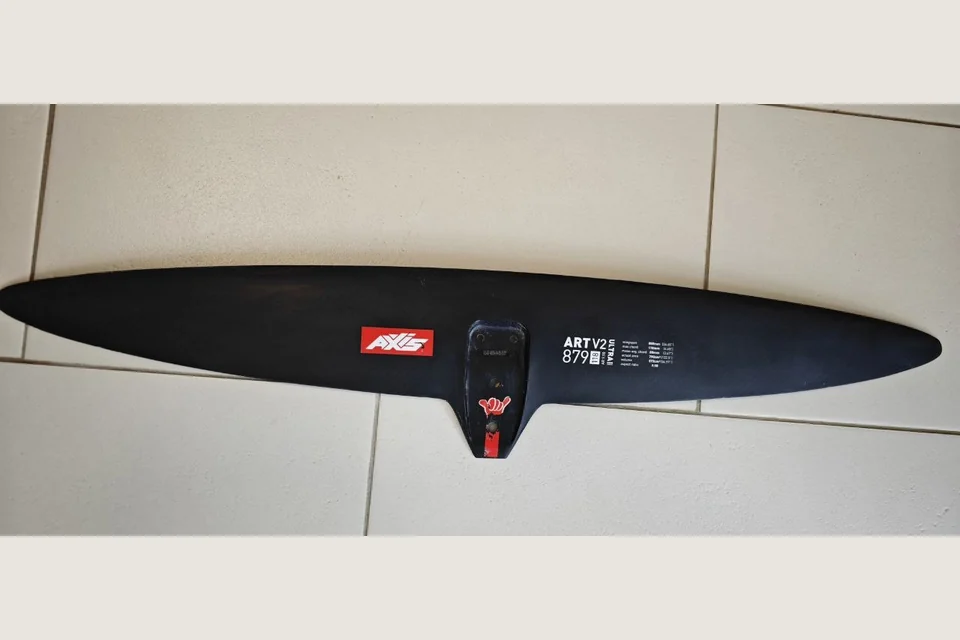
An AXIS ART V2 879 front wing covered in scratches, a marked stabilizer, and the same parts after surface refinishing: this is a recent carbon hydrofoil repair at FoilRevive in Mauritius. The photographs below show the starting condition and the visible result, with separate views of each part.
If your own foil looks similar, these pictures give you a useful reference when asking about repair. The next step is to send photos of your equipment so we can discuss the damage, the work needed and a quote.
The AXIS ART V2 879 before repair
The model name is visible on the wing. AXIS lists the ART V2 879 with a 879 mm span and 790 cm² area; 879 is the model designation, not its area in square centimetres.
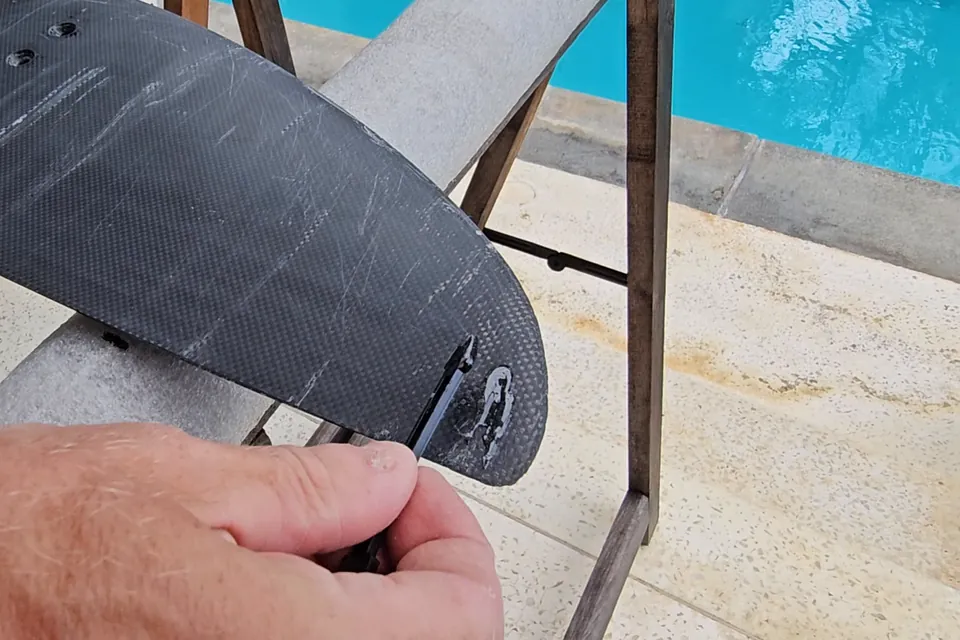
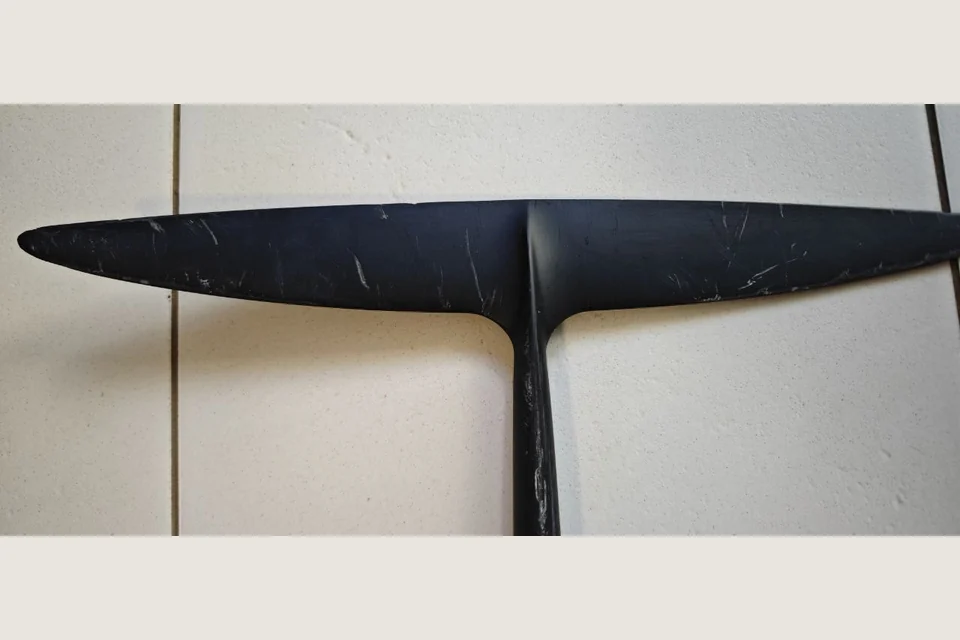
The underside photographs show numerous pale scratches across both halves of the wing. Some marks run across the chord, while others follow the surface towards the tips. There are marks near the central mounting area as well as farther out on the wing.
Before: scratches across the underside
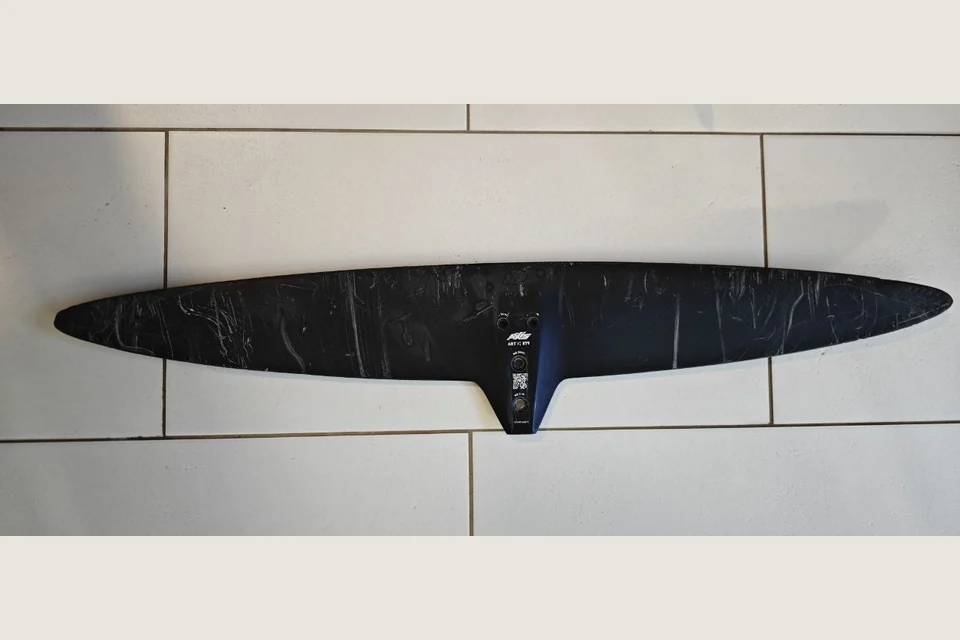
After: the underside following surface refinishing
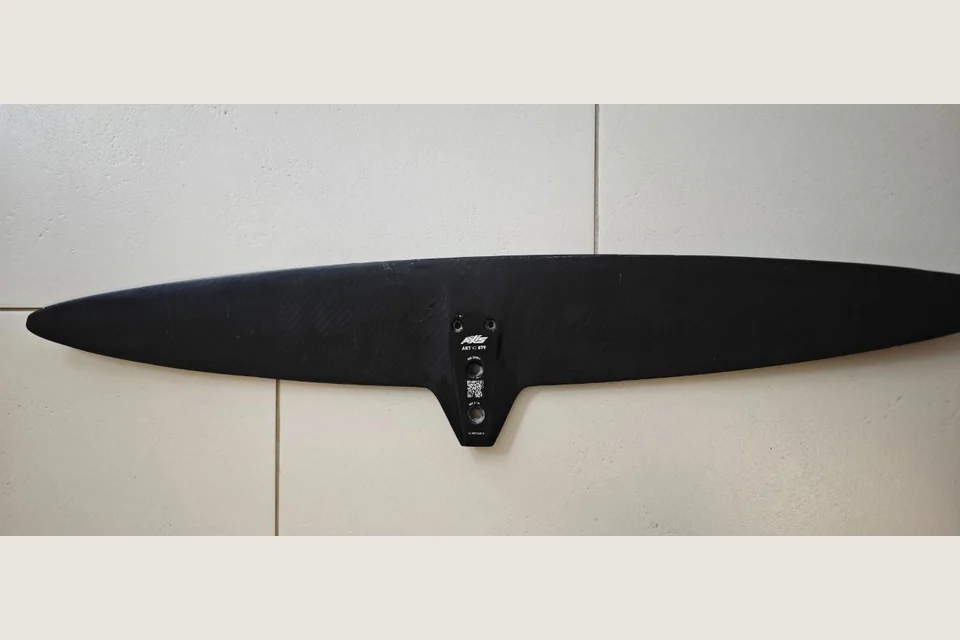
The widespread white scratch pattern is much less apparent in the after photograph, and the surface has a more even appearance. The opening photograph shows the opposite face of the finished wing, including its AXIS logo and ART V2 879 marking.
The stabilizer before and after
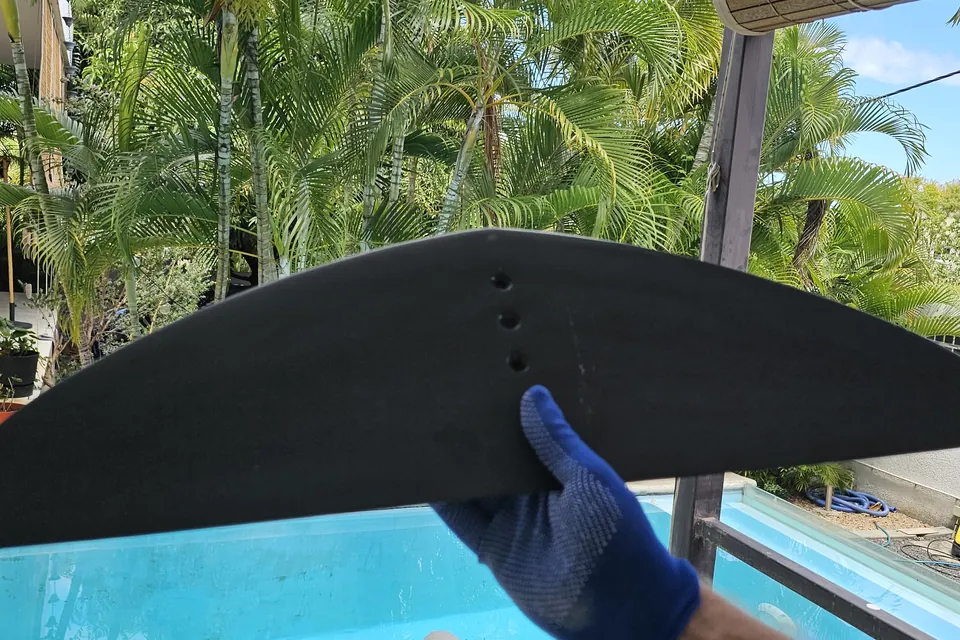
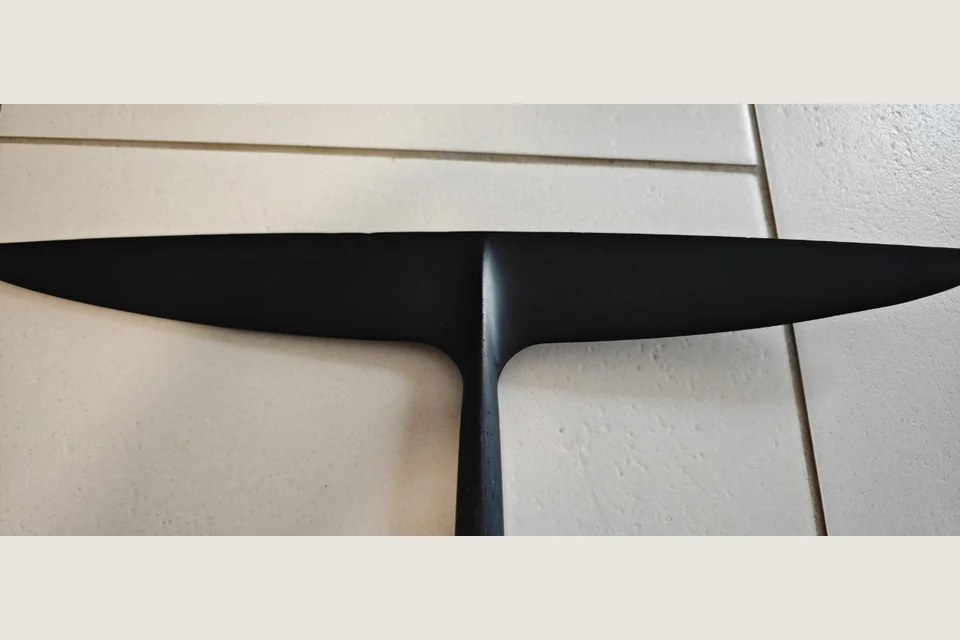
The smaller rear wing also had visible surface marks. In the before photograph, pale lines appear on both sides of its central connection. The after view shows a more uniform dark finish across the rear wing.
Before: marks on the rear wing
After: the refinished rear wing
When requesting a repair assessment, include the stabilizer even if the front wing has the most obvious damage. Separate photos of each component help us understand the full job and prepare a quote for the parts you want repaired.
What does this repair result tell you?
The comparison documents a visible improvement in the surface finish. It does not establish the condition of the internal laminate or a measured change in speed, glide or strength. Those questions need their own assessment; a finished surface photograph cannot answer them.
For an owner, the useful distinction is between a surface job and damage that needs further investigation. A scratch, a chipped edge and a crack can require different decisions. Our guide to carbon foil scratches, chips and cracks explains what to look for before contacting a repairer.
Can a scratched carbon foil be repaired?
Surface scratches can often be treated, but their depth matters. ENSIS distinguishes light cosmetic marks from deeper grooves that need filling. Cracks or suspected damage to the carbon need a separate assessment before further use.
For your own foil, send a close-up and a full view of the affected part. Explain whether the damage followed a particular impact and whether you have noticed anything unusual. We use that information to discuss the next step; some damage needs inspection with the part in hand.
If you are considering doing the work yourself, read our DIY hydrofoil repair guide first. Check the manufacturer's instructions and any warranty conditions before authorising changes to the part.
How much does foil repair cost in Mauritius?
FoilRevive's published starting price is Rs 5,500 for a front wing and stabilizer set. The final quote depends on the nature and extent of the damage. That is the starting price for the set, rather than a fixed charge for every repair or a separate price for this AXIS job.
See our hydrofoil repair prices for the scope of the starting price. For one wing, a stabilizer or a different combination of parts, send photos and request an individual quote. Our repair or replace guide can also help you compare the options.
Arrange a repair while you are in Mauritius
FoilRevive provides carbon foil surface repair in Mauritius. Collection from your riding spot and return delivery may be possible by arrangement. Include your location and the dates you need the equipment when you contact us so we can discuss the practical details.
To request an assessment, send:
- A photo of the whole front wing and stabilizer, including both faces where possible.
- Close-ups of the damaged areas, tips, edges and any marks near the connections.
- The brand and model, what happened, your location and your preferred return date.
We can then discuss the proposed work, price and timing for your equipment.
Keep the surface protected afterwards
Rinse away salt and sand, let the parts dry before storing them, and use covers during transport. Avoid placing an unprotected foil directly on hard ground. A quick visual check after each session also makes new marks easier to notice.
Our foil care guide and after-session inspection checklist cover those habits in more detail.